
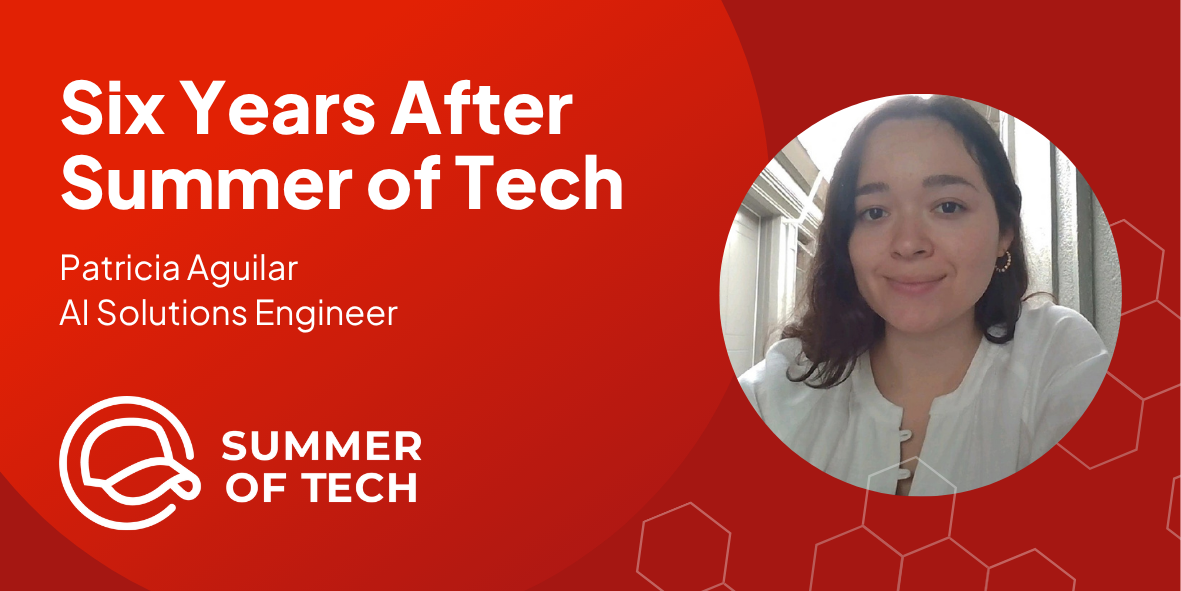
Back in 2020, the world of tech looked completely different through my eyes. I was studying, working to cover life expenses, and doing everything I could to get that door open. For some people, it looked very easy; for some, it looked lucky; for others, it was a struggle. So I tried to tune out the noise as much as I could and just focus on my own lane.
One day I sat down and thought about that old classic interview question: "where do you see yourself in five years?" After a proper chat with myself, I figured - rain, sunshine, or storm - something had to work out if I just kept going. So I went into the wild.
Since then, I've picked up a few things that took me from being the intern who could barely understand what Git was, to the person on the team now responsible for looking after our GitHub Organisation. Here are some of my learnings along the way - not just from personal experience, but also from observations and others' experiences.
Breaking in
I went to all of SoT's related events - workshops, meet-and-greets, mock interviews, etc. They genuinely helped me understand the "game" of interviewing: not just the technical prep, but the unwritten rules - how to talk about your work, how to read a room, how to follow up. That stuff isn't easy to learn when you're so new, and it made a real difference. 2020 SoT wasn't an easy round for me, but it taught me what I needed to do, and I did it beautifully in 2021 - I had multiple internship offers in hand and made lots of connections. 2022 was also a good one.
The path maybe looking nothing like you imagined
I'll also say this plainly: if it feels hard, it's probably because it is hard. Learning large volumes of new information isn't trivial, and hardly anyone does it painlessly.
When I started, I had just as many questions as you probably do right now. So, I asked them. Regardless of whatever others thought. And I quickly learned that some people genuinely want to help, and some don't. Some people will be kind, and some will judge more than they support. But I also quickly learned that - that's okay. Criticism, even the clumsy kind, is part of the process. Learn to take what's useful from it and let the rest go.
I did three internships - two in software development, one in IT. Every single one of them was valuable, and all of that experience still feeds into my current role today as an AI Solutions Engineer, even the parts that felt unrelated at the time. I still remember all of my team leads, and the various team members who helped me become a better engineer.
Not everything is a straight line when it comes to shaping a career. Traditionally, some people work directly in what they studied - say, software engineering - and even then, life takes turns. In a field like AI right now, be prepared to shape your own path as you go, because the map isn't fully drawn yet. It might take years before you land your ideal role. That's okay. Life happens, and that's okay too.
It's also completely fine to work in other industries - whatever pays the bills - while you keep pushing towards tech in the background. It doesn't make you less committed. It makes you resourceful.
Something I've held onto the whole way through: "slowly but surely" beats "pause and do nothing," every time. Momentum, even small momentum, compounds. One industry cert here, a lab there - it all counts.
Here is one tip for you: this has helped me more than I expected. Whenever you get a "no" - or worse, silence - from a job application, try emailing the company and asking for feedback. Most of the time, there's no response. But when there is, it's worth being genuinely analytical about it rather than taking it personal. Learning what you can from it. That one reply can tell you more than ten job ads.
Patricia Aguilar - AI Solutions Engineer at Hybrit Services NZ